TL;DR: Combining IoT and blockchain
In my Ph.D. research, I investigate how blockchain and multi-chain technology can make IoT communications secure, reliable, and interoperable, with a focus on the automotive industry. As connected and autonomous vehicles become more common, the need for secure data sharing across vehicles, infrastructure, and service providers (like insurers and manufacturers) is critical. My work applies blockchain’s decentralized system to securely manage and share this data, particularly in scenarios like accident management. By incorporating multi-chain technology, my research enables different systems to communicate smoothly and securely, setting the groundwork for scalable and interoperable IoT networks in the connected automotive landscape.
Background and Motivation
The Rise of IoT
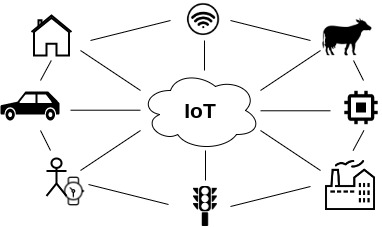
The Internet of Things (IoT) has transformed various industries by enabling devices to communicate and exchange data. From smart homes to autonomous vehicles, IoT is reshaping our interaction with the digital world.
Blockchain: Beyond Cryptocurrencies
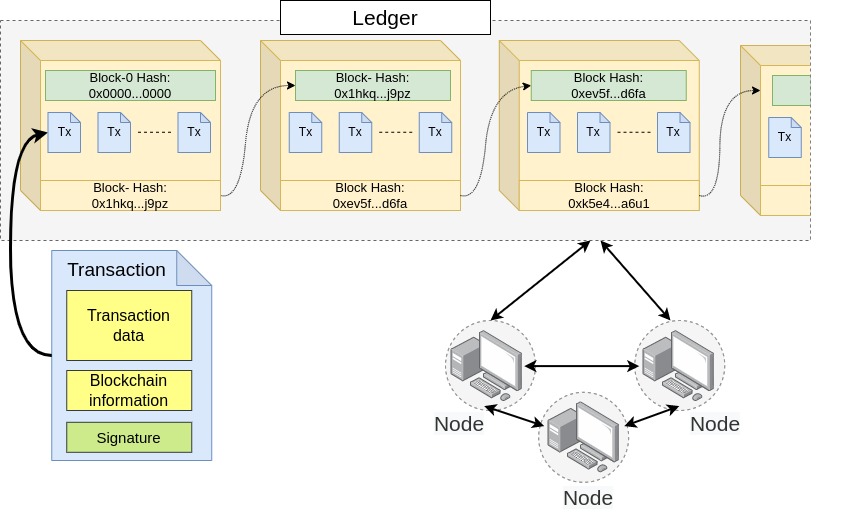
Blockchain technology, originally designed for cryptocurrencies, provides a decentralized ledger that ensures secure and transparent transactions. Its potential applications extend far beyond finance, offering significant improvements in data integrity, security, and traceability across various sectors such as healthcare, supply chain management, and the Internet of Things (IoT). By leveraging a shared ledger with these specific properties, blockchain fosters trust and accountability in data exchanges, making it a transformative tool for modern digital ecosystems.
Case Study: Automotive Industry
The thesis is part of the Smart-IoT-for-Mobility project. The SIM project focuses on the integration of blockchain technology within the automotive sector to enhance data management and communication. By digitizing the vehicle lifecycle and leveraging smart contracts, the project aims to create a seamless, secure, and automated ecosystem for managing data from connected vehicles. The idea is that blockchain ensures reliable and tamper-proof data exchange between various stakeholders like OEMs, insurers, and service providers, ultimately improving efficiency and trust in the automotive industry.
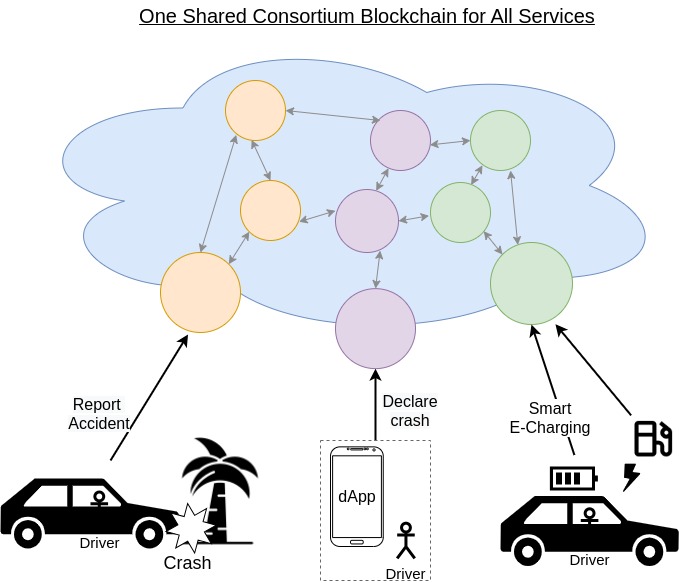
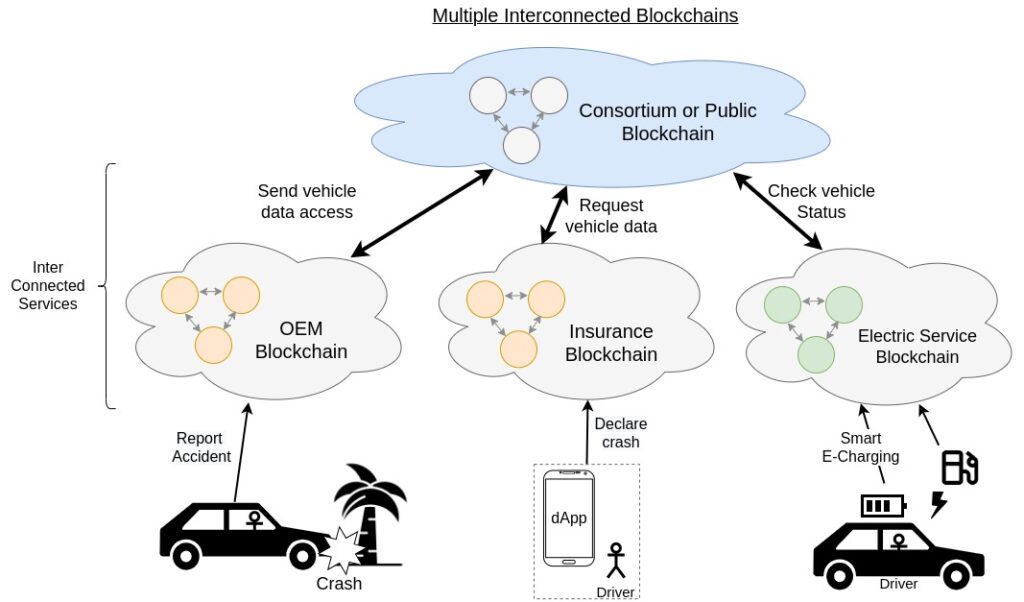
In the thesis, we focus on using blockchain and multi-chain technologies to manage data from connected vehicles, specifically in the case of road accidents, which we analyzed to demonstrate the practical benefits and challenges.
→ Allow multiple independent services around the connected vehicle, to communicate and exchange information, using a trusted system that doesn’t require any central trusted-third party.
Research Objectives
The objectives range from performance analysis of blockchain platforms to developing blockchain client software for IoT devices and investigating multi-chain solutions. Each objective builds on previous findings to provide a structured approach to understanding blockchain’s application and challenges in IoT.
Performance Analysis of Blockchain Platforms in Automotive Contexts
- Objective: Assess the suitability of private and consortium blockchain platforms for automotive applications.
- Method: Analyze performance metrics like speed, reliability, and scalability of various consensus algorithms.
- Expected Outcome: Identify the most efficient blockchain platform for automotive scenarios, offering insights for blockchain application in the industry.
Exploration of Blockchain Client Applications on Development Boards
- Objective: Evaluate the implementation of blockchain client applications on development boards.
- Method: Test and assess various blockchain clients, focusing on performance, capabilities, and limitations.
- Expected Outcome: Understand the feasibility and efficiency of blockchain clients in capable IoT environments, setting the stage for further optimization.
Development of an Optimized Blockchain Client for Constrained IoT Devices
- Objective: Develop an optimized blockchain client application for IoT devices with limited connectivity.
- Method: Design and implement a streamlined, adaptable blockchain client for constrained IoT devices.
- Expected Outcome: Demonstrate a practical, efficient blockchain integration approach for IoT devices with limited resources, enhancing network interoperability and security.
Investigation of Multi-Chain Solutions for IoT
- Objective: Explore and assess the viability of multi-chain ecosystems in IoT contexts.
- Method: Implement and evaluate a multi-chain ecosystem, such as Polkadot, in the automotive IoT context.
- Expected Outcome: Provide insights into the application of multi-chain solutions in IoT, potentially catalyzing their adoption in IoT-based industries.
Future Challenges and Directions in Multi-Chain Technology for IoT
- Objective: Identify future research avenues and challenges in multi-chain technology for IoT.
- Method: Analyze outcomes from implementing an automotive use case within a multi-chain framework.
- Expected Outcome: Establish a foundation for future research in multi-chain technology, highlighting its importance and potential difficulties in IoT environments.
Full Thesis Access
For a detailed examination of my research, you can access the full thesis here.
Contact
If you have any questions or would like to discuss my research further, please feel free to reach out.